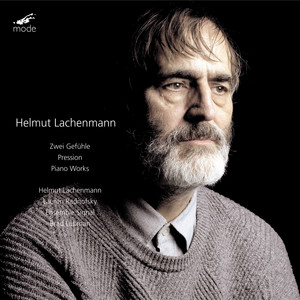
Helmut Lachenmann
Helmut Friedrich Lachenmann (German: [ˈhɛlmuːt ˈlaxn̩man] ; born 27 November 1935) is a German composer of contemporary classical music, pianist and academic teacher. He taught, among others, at the Darmstädter Ferienkurse, the Musikhochschule Stuttgart and the Musikhochschule Hannover.
As a private student of Luigi Nono in Venice, Lachenmann was inspired to reflect social and political contexts, and to include unconventional playing techniques and noises in his compositions. He stopped using electroacoustic music after working at the studio of the University of Ghent in 1965, but turned to what he called musique concrète instrumentale: calling for unusual and extreme sound production from traditional instruments. He created compositions of many genres. In an opera, Das Mädchen mit den Schwefelhölzern based on Andersen's "The Little Match Girl" and texts by Leonardo da Vinci and Gudrun Ensslin, the performers speak, play instruments, sing and act. Instrumental works include piano pieces, string quartets such as Gran Torso and Reigen seliger Geister, ensemble works such as Mouvement (- vor der Erstarrung), and music for large orchestra including Accanto which juxtaposes a solo clarinet to an "orchestra of noise, friction, and unorthodox sound generation". Lachenmann is regarded among the leading German composers of his time.
Similar Artists